Map the real process (not the org chart version) before touching Odoo
The pretty blueprint describes how the company should operate. The warehouse and the plant describe how it does operate. Only the second one works for configuring an ERP.
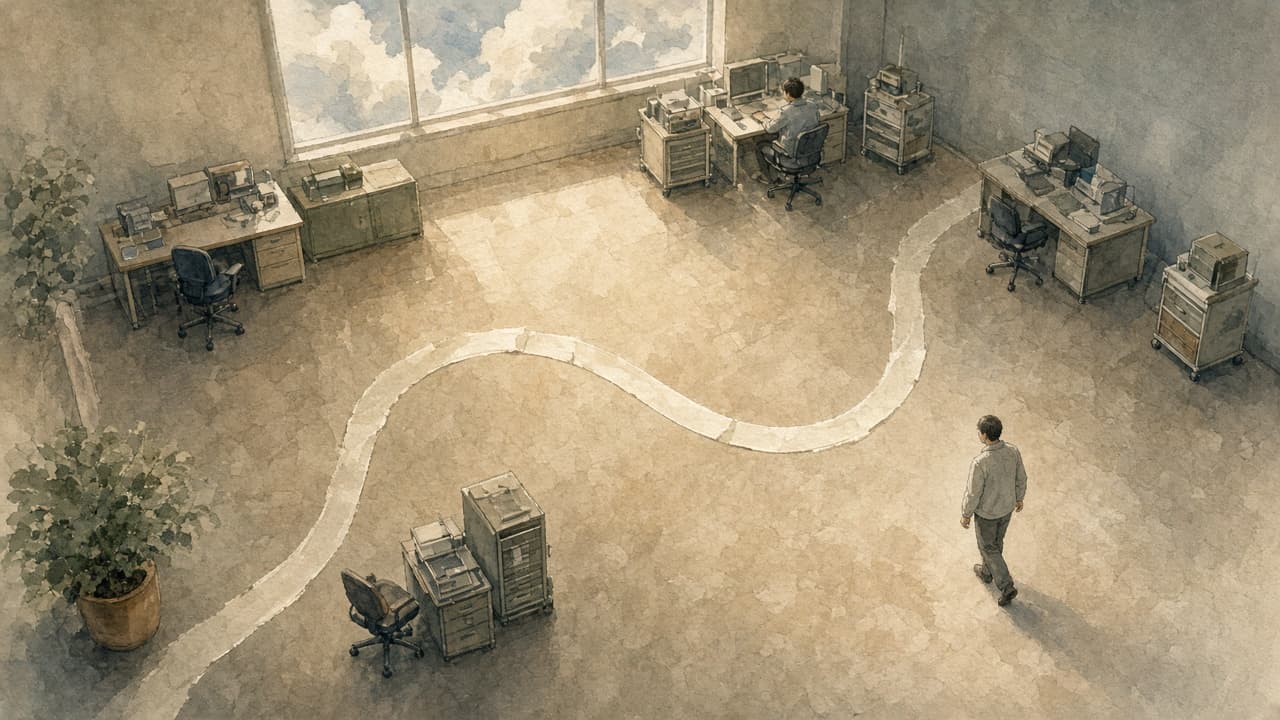
There's one kind of project that hurts in a special way: you paid for a flawless blueprint, with diagrams, a RACI and "to-be" promises. The ERP was configured against that document. A month later, the plant and the warehouse still use their shortcuts, finance doesn't trust the reports and someone asks why "the system doesn't reflect the business."
Because the org chart process was mapped, not the real one.
Official isn't the same as operated
In manufacturing, distribution, food, retail or services tied to the supply chain, the gap is an everyday thing:
- The procedure says every shipment needs validated picking. On the floor, the rush order ships "and gets documented later."
- The org chart says purchasing approves. In practice, operations negotiates with the usual vendor over chat.
- The manual describes one quality flow. The night shift follows another sequence because the team is smaller.
None of those shortcuts is automatically "bad." Some of them keep the promise to the customer. The mistake is designing Odoo as if they didn't exist. The ERP process discovery that works is the kind that walks the operation, asks what each role opens first in the morning and reviews the spreadsheets nobody put in the RFP.
Discover: real processes and data
At KAI Consulting, Discover isn't a slide-deck kickoff. It's the Processes and Data practice placed at the start:
- Follow an order, a manufacturing order or a receipt end to end with the people who execute it.
- Inventory shadow systems (Excel, WhatsApp, shared folders).
- See which data each area considers "official" (spoiler: it's not always the same).
- Separate frequent exceptions from organizational myths ("it's always been done this way" vs. "it happens twice a year").
Without that, process redesign is decorative. With it, you can decide what to standardize, what to respect and what to stop doing.
Master data: the other invisible process
The real process isn't just steps. It's data. Products with three codes, duplicate customers, creative units of measure, price lists that live in one person's head. Configuring Odoo on dirty master data reproduces the chaos with a better interface.
Before touching complex flows, assign an owner and criteria to:
- Products and variants that are actually sold or manufactured.
- Partners (customers/vendors) without operational duplicates.
- Accounts, journals and taxes aligned with how you close.
- Locations and routes that match the physical warehouse, not the idealized layout.
Clean Odoo master data isn't an abstract "data project." It's what lets the redesigned process run without fighting the master data at every click.
From the real map to a design you can operate
Once you've seen the floor, Design stops being a copy of the blueprint:
- Configure before customizing: standard stages, routes and documents that cover the real 80%.
- Prototype with the shift or team that lives the exception, not just with the sponsor.
- Agree on what the business changes (new process) and what the system reflects (process that stays).
- Define Odoo reporting that looks at the same events as operations, so management stops asking for "the Excel with the truth."
Useful process consulting ends in configuration and implementation decisions, not in a PDF nobody reopens.
Industries as context, not invented case studies
Complexity shows up where there are materials, lots, routes, returns, multiple warehouses or services tied to deadlines. Manufacturing, distribution and wholesale, logistics, food and beverage, retail: the pattern repeats even when the product changes. The org chart promises a straight line; operations deliver exceptions. Your discovery has to start there, without invented case studies or borrowed logos.
Implement and evolve without betraying the map
Implementing in waves lets you test the redesigned process in a real scope before expanding. Evolving (with Support and Evolution) keeps the shortcut from quietly coming back six months later and pulling the system out of alignment again.
If AI and Automation come in later, they also start from the real process: automating a flow nobody follows only speeds up the detour.
Signs your blueprint doesn't operate
- Key users say "it's one thing in the system and another on the plant floor."
- There are required fields that always get filled with junk "to move forward."
- Management reports get rebuilt outside Odoo.
- The partner talks more about the ideal to-be than about what they saw on the warehouse walkthrough.
- Nobody from the floor signed off on the design; only leadership did.
If that sounds familiar, pause the mass configuration. Go back to Discover.
A practical next step
This week, pick an "official" document (order, manufacturing order, receipt) and quietly follow it with the person who executes it. Write down every deviation from the procedure posted on the wall. Those deviations are your implementation's real backlog, more honest than the org chart.
At KAI Consulting we map real processes and data before touching Odoo: from the first workshop to a system that reflects how the business operates, not how it's drawn. If you already paid for a blueprint that never reached the floor, let's talk. We start with the operation.